A Gamer's Take on the Remake Renaissance: Nostalgia, Cash Grabs, and Timeless Classics
Ah, 2026. As a professional gamer, I’ve seen my fair share of pixels, polygons, and… well, a whole lot of the same pixels and polygons dressed up in fancy new clothes. The remake trend isn’t just a wave anymore; it’s a perpetual tsunami washing over our consoles and PCs. From the sublime to the ridiculous, it seems like every game I loved (and some I’d forgotten) is getting a second chance at life. But let me tell you, not all resurrections are created equal.
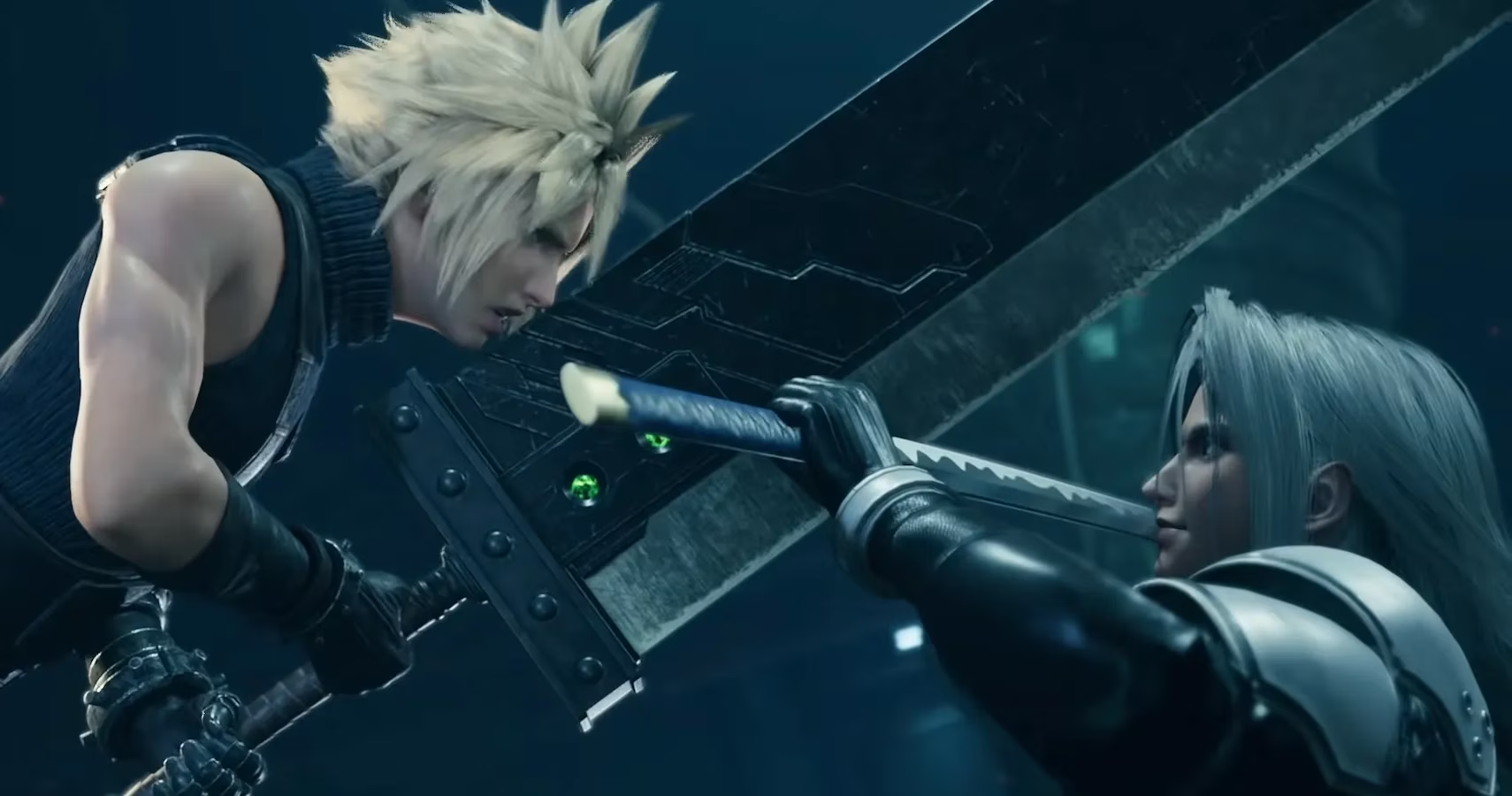
The Nostalgia Engine: Why We Can't Let Go
Let's be real for a second. The driving force behind this whole remake mania? Us. The players. We’re a sentimental bunch, clinging to the digital memories that defined our childhoods and teenage years. Publishers have simply become masterful psychologists, pushing our nostalgia buttons with the precision of a surgeon. They know that the promise of reliving that first magical playthrough of a beloved classic is an irresistible siren song. It's an easy cash grab, sure, but it works because we want it to work. We see that shiny new trailer for a game we poured hundreds of hours into, and our wallets practically open themselves.
The strategy is often brutally simple:
-
Step 1: Take a beloved IP.
-
Step 2: Apply a modern graphical coat of paint (ray tracing, anyone?).
-
Step 3: Maybe add a cutscene or two.
-
Step 4: Slap a ‘Remake’ or ‘Remastered’ label on it.
-
Step 5: Profit. Again.
Look at a game like Persona 5. It launched in 2017, and by 2020, we already had Royal. Don't get me wrong, Royal is fantastic—it’s arguably the definitive version—but the core experience was largely intact after just three years. It makes you wonder about the definition of ‘classic’ in our accelerated digital age.
The Two Schools of Remake Thought
In my playthroughs, I've observed two distinct philosophies at work in the remake industry.
1. The Faithful (and Sometimes Lazy) Update:
This is the most common breed. The goal here isn't to reinvent the wheel but to polish it until it shines. These remakes are comfort food. They're for the fans who want the exact same meal but on a fancier plate. The risk? It can feel like a cynical cash grab if the changes are too minimal. Is a resolution bump and a stable framerate worth full price? That debate rages on in every forum.
2. The Ground-Up Reimagining:
This is the riskier, more ambitious path—and my personal favorite when done right. The prime example is, of course, Final Fantasy VII Remake. They didn't just update the 1997 original; they expanded its world, deepened its characters, and turned a beloved linear story into a sprawling, genre-defying epic. It respected the source material while having the confidence to forge its own destiny. This approach treats the original as a foundation, not a prison.
The Classics That Defy Time (and Remakes)
Now, here’s the funny thing. While publishers are scrambling to remake everything, some games simply exist outside of time. They don't need a remake.
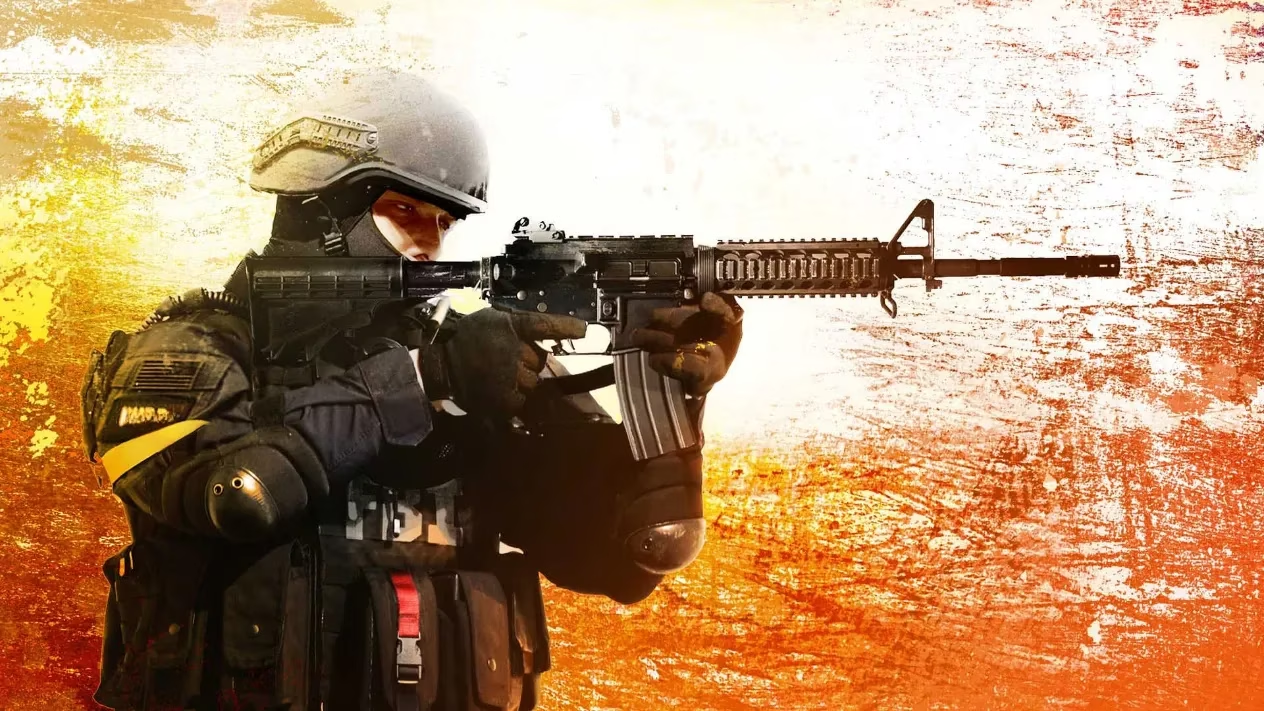
Take the Counter-Strike series. CS 1.6, a game older than some pro players, still boasts thousands of concurrent players. CS:GO refined the formula but kept the soul intact. These games are like digital chess; the fundamentals are so strong that graphical updates are a side note. Players will happily log thousands of hours on what is, essentially, the same sublime core gameplay loop. No remake required, thank you very much. This teaches us a crucial lesson: Lasting gameplay mechanics are more valuable than fleeting graphical fidelity.
The Publisher's Dilemma: What Gets the Green Light?
So how do the suits in the boardrooms decide what gets reborn? It’s not exactly rocket science. The formula looks something like this:
| Primary Factor | How It Works | The Pitfall |
|---|---|---|
| Proven Financial Success 🤑 | “This game made bank before; it'll make bank again.” | Ignores cult classics that flopped initially but deserve a second shot (e.g., Vampire: The Masquerade - Bloodlines). |
| Built-in Fan Demand 📢 | Loud, nostalgic fanbase = guaranteed sales. | Can lead to safe, uninspired updates afraid to innovate. |
| Technical Feasibility 🔧 | Can our new engine make this old game look jaw-dropping? | Sometimes the old, janky code is a nightmare to work with. |
| Brand Revival Potential 🚀 | Could this remake launch a new franchise era? | High risk, high reward. Just ask Doom... or Duke Nukem Forever. |
Ah yes, Duke Nukem Forever. The cautionary tale we all remember. Its remake amplified the original's most dated and crude aspects, resulting in a game that felt like a relic awkwardly stumbling into the modern era. Contrast that with the Doom (2016) reboot. It took the essence of the original—the speed, the metal, the sheer demon-slaying power fantasy—and amplified it with modern tech and design. One failed by being a slave to the past; the other succeeded by being its celebrant.
A Plea from the Trenches: Choose Wisely
As we sail further into this sea of remakes, my professional gamer's plea to the industry is this: choose wisely. Not every memory needs to be disturbed. Some games are perfect time capsules, and a botched remake can tarnish a legacy. The goal shouldn't just be to make a quick buck off my nostalgia. The goal should be to either:
-
Faithfully preserve a masterpiece for new hardware (and do it with care and extra content).
-
Boldly reimagine a game with untapped potential for a new generation.
Remaking a mediocre game won't make it great. But remaking a great game poorly can make us forget why it was great in the first place. Let some legends rest in peace, celebrated for what they were. For the ones you do bring back? Give them the respect and innovation they deserve. My backlog—and my inner child—are counting on you. 😉
Now, if you'll excuse me, I have a 20-year-old game to boot up. Some things just don't need improving.
Comments