Counter-Strike 2’s New Genesis Uplink Terminal Replaces Loot Box Uncertainty with Direct Skin Pricing
In late 2025, Counter-Strike 2 received one of its most significant monetization updates since transitioning from CS:GO. The addition of the Genesis Collection introduced a fresh set of weapon finishes, but the real novelty was how players could obtain them. Instead of relying solely on traditional weapon crates that demand a key purchase for a randomized reward, Valve debuted the Genesis Uplink Terminal—a hybrid acquisition method that blends weekly gameplay drops with a dynamic pricing model. The Terminal has quickly become a flashpoint for debate among the game’s 30 million monthly players, touching on everything from consumer protection to the future of CS2’s sprawling skins economy.
The broader context is essential. For years, Counter-Strike’s cosmetic ecosystem has revolved around cases. Players earn crates during matches, then buy a $2.50 key to unlock a random skin from a curated collection. The odds of pulling a rare, high-value finish are deliberately slim, and the market reflects that scarcity: blue-tier skins often sell for pennies, while a coveted Factory New StatTrak knife or red-grade assault rifle can command thousands of dollars on the Steam Community Market or third-party trading platforms. Critics have long equated this model to gambling, noting the upfront payment and uncertain outcome mirror slot-machine mechanics. Valve, aware of growing regulatory scrutiny across Europe, Asia, and North America, has previously experimented with tweaks—such as the X-Ray container in France that showed the item inside before payment—but the Genesis Uplink Terminal represents a far deeper pivot.
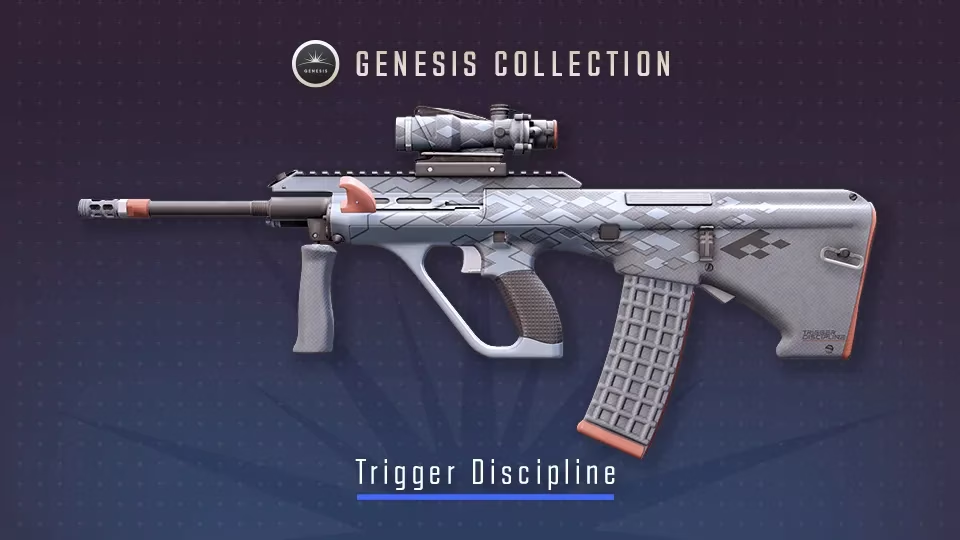
At its core, the Terminal arrives as a weekly reward for simply playing the game. Players can “unseal” it free of charge, after which the interface transforms into a stylized encrypted laptop linked to an anonymous arms dealer. Through a text-based conversation, the dealer presents a specific gun skin along with a direct dollar price. The player then has a stark choice: accept the offer and fund the purchase from their Steam Wallet, or decline and roll the dice on the next offer. Up to five offers can appear in a single Terminal—some players have reported rare occurrences of six—but if all are turned down, the Terminal self-destructs and yields nothing. Crucially, there is no going back: once an offer is refused, it is gone forever. A unique twist is the Original Owner Certificate, which tags any purchased weapon as first-hand. If the item is ever sold or traded, the certificate evaporates, theoretically adding a layer of provenance but also amplifying the fear of missing out on a one-shot deal.
Early community testing quickly revealed eye-watering price tags. One user shared a screenshot of a rare M4A4 offered for just under $1,600, while others encountered desirable StatTrak finishes hovering in the several-hundred-dollar range. A first-hand attempt documented by a journalist saw a Restricted M4A1-S appear for about $8, followed by progressively lower-rarity weapons dropping to a mere 21 cents. The experience felt, as described, “like being strong-armed,” because the direct ask—pay $10 now or lose the chance—carries a psychological weight absent from the key-and-crate loop.
Community reaction on forums and social platforms has been overwhelmingly negative. DankMemeRipper1337 voiced a common grievance: “I’m not paying 1000+ bucks for a skin. With the random loot box, you had at least a chance to open something good—albeit the numbers not being in your favour at all. Now you need the gambling luck, a lot of money and the offer is also one and done. Feels rather predatory and kinda poorly implemented.” Another player, jmsdnt, called it “possibly the worst monetization strategy I’ve ever seen in a video game,” arguing that the old case model was appealing precisely because a small key investment could occasionally yield a massively valuable item. Zrx74 encapsulated a widely shared sentiment: “Somehow asking for 1500 USD for a Stattrak red feels so much worse than opening 1500 USD worth of cases.”
Adding a more analytical voice, doctoral researcher Harshdeep Mangat, who specializes in responsible gaming, warned that the Genesis Terminal “might not be a loot box in a traditional sense, but signs point to there being a possible chance of problematic consumption, compulsive behaviour and as always, no check on underage consumption.” Mangat highlighted how elements like the limited re-rolls and the one-time Original Owner Certificate create acute FOMO. Moreover, the Terminal does nothing to dismantle the ecosystem of third-party gambling sites that use Steam’s API to let skins function as casino tokens, often exposing minors to unregulated betting.
Valve has not been transparent about the pricing algorithm. Prices appear dynamic, but the company has not clarified whether they adjust based on aggregate player rejection rates, market demand, or internal rarity tiers. The lack of clarity fuels suspicion that the system is engineered to extract maximum revenue from high spenders while giving casual players a fleeting glimpse of a skin they will never afford. Interestingly, players who find the Terminal unappealing can sell their weekly drops on the Steam Community Market, where Terminals were fetching around $5.35 at launch, providing an immediate cash-out option that further complicates the economy.
The Genesis Uplink Terminal does not replace weapon crates; those remain abundant and continue to drive the majority of skin transactions. Yet the new feature seems poised to become a permanent fixture. Mangat’s analysis suggests Valve is testing a model that retains compulsive engagement while sidestepping some legal definitions of gambling. By removing the upfront key cost and instead offering a free peek followed by a direct purchase invitation, the company may be seeking to argue that the system is not a game of chance but a straightforward marketplace. However, the random sequence of offers, the inability to revisit declined items, and the staggering price variance keep the experience tethered to the same endorphin-driven loops that regulators aim to curb.
From a long-term perspective, the Genesis Terminal challenges the entire skin economy. High-value items purchased directly from the Terminal will flood the market with Original Owner Certificates, potentially altering collector behaviors and resale values. Meanwhile, the psychological shift—from the lottery thrill of a crate opening to the cold transactional nature of a direct offer—may alienate the player base that has sustained Counter-Strike’s cosmetic marketplace for over a decade. As Valve continues to iterate, the tension between monetization innovation and consumer trust will define not only the fate of CS2’s new system but also how other live-service games navigate increasingly hostile regulatory environments.
Comments