How a Desperate 'Counter-Strike 2' Deal Saved Valve from Bankruptcy
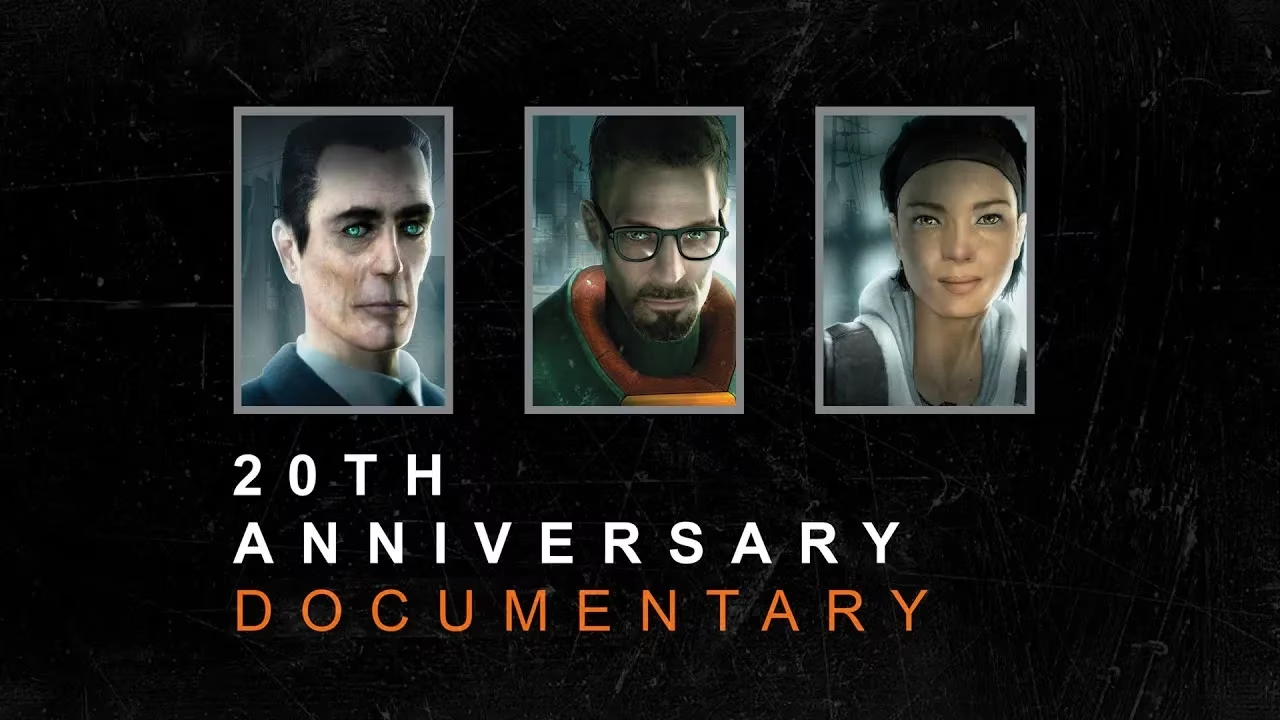
The year was 2024, and as Half-Life 2 celebrated its 20th anniversary, Valve dropped a documentary that peeled back the curtain on one of the most chaotic periods in gaming history. It wasn’t just about crowbars and headcrabs—it was a raw look at the company’s near-death experience, a story where a phantom game called Counter-Strike 2 became the unlikely life raft.
Valve’s COO Scott Lynch sat down with the filmmakers and, with a wry smile, recalled the moment everything seemed lost. The lawsuit with Vivendi had been raging for years. Vivendi, through Sierra Entertainment, owned the Half-Life IP and had quietly started selling Counter-Strike in Asia without Valve’s permission. When Valve pushed back, the media giant got ugly—dragging Gabe Newell’s then-wife into the legal mess and trying to bleed the studio dry.
“We’re really kinda running on fumes at that point,” Lynch said, the exhaustion still echoing in his voice twenty years later. And then, the rug got pulled.
Lynch had been working on a deal with a major publisher to fund a game they were calling Counter-Strike 2. Just as they were about to sign, the phone rang. The publisher bailed. Lynch remembers the call with Gabe Newell: “He was like, ‘So how fucked are we?’ And I was like, ‘Well, we’re kind of screwed.’” Talk about a gut punch.
But Lynch didn’t have the luxury of despair. With Vivendi’s lawyers circling and Half-Life 2 still nowhere near finished, he immediately started chasing another publisher. Fate—or maybe sheer stubbornness—intervened. Another deal materialized for the same Counter-Strike 2 project, an infusion of cash that would keep the lights on and the lawsuit alive. The publisher has never been officially named, but Lynch’s hints point toward Electronic Arts, which later distributed Half-Life 2 at retail before Steam swallowed the world.
Here’s where things get delightfully weird. Gabe Newell was, and still is, a huge knife enthusiast. To celebrate the life-saving agreement, he handcrafted a blade with the words “Counter-Strike 2” etched into the steel. Imagine that—a one-of-a-kind relic forged in the middle of a legal war. Lynch grinned as he recalled it: “Gabe at that point was super into knives and as the deal gift for the parties he built a knife that was inscribed Counter-Strike 2.” You’ve got to be kidding me.
But there was a catch. The deal structure gave the publisher an escape hatch: after Half-Life 2 shipped, they could terminate the agreement and get their money back. And that’s exactly what happened. Lynch admitted, “Maybe a good choice, because it took us a long time to ship Counter-Strike 2.” The “CS2” they were peddling wasn’t the 2023 tactical shooter we know today—it was the phoenix that rose as Counter-Strike: Source in 2004, built on the Source engine and co-developed with Turtle Rock. It arrived bundled with Half-Life 2, a quiet savior that never got the spotlight.
The documentary reveals that Vivendi eventually found out about this sudden influx of capital and, in Lynch’s words, “kind of lost their mind trying to figure out how did that happen?” Their strategy had been simple: starve Valve of money and force a surrender. Instead, they got a studio that refused to blink. In April 2005, the legal nightmare ended with Valve’s complete vindication. Vivendi had to stop distributing Valve’s games, and the Half-Life rights came home.
As we sit here in 2026, it’s almost hilarious to look back. Valve is now a titan, Steam is a household name, and the real Counter-Strike 2 finally dropped three years ago to massive acclaim. But that phantom deal from 2003—the one that almost fell apart twice—was the fulcrum. It kept the lights on just long enough for Half-Life 2 to finish cooking and for a small company to outlast a corporate giant.
Lynch paused during his interview, letting the absurdity hang in the air for a moment. Then he carried on, because that’s just how Valve roles. And somewhere, in a locked drawer or a display case, that Counter-Strike 2 knife still exists—a shiny, sharp reminder that sometimes a placeholder name can save everything.
Comments