How I Learned to Chase CS2 Cases Without Losing My Mind
I still remember the first CS2 case I ever earned. It arrived after a scrappy matchmaking win, a little rectangle of possibility glowing in my weekly care package. I had no idea what a float was, no clue that a key cost extra, and absolutely no business treating a virtual box like a lottery ticket. But that is exactly what it was — and in 2026, the ritual still has its hooks in me.
The weekly ritual: free cases, small hopes
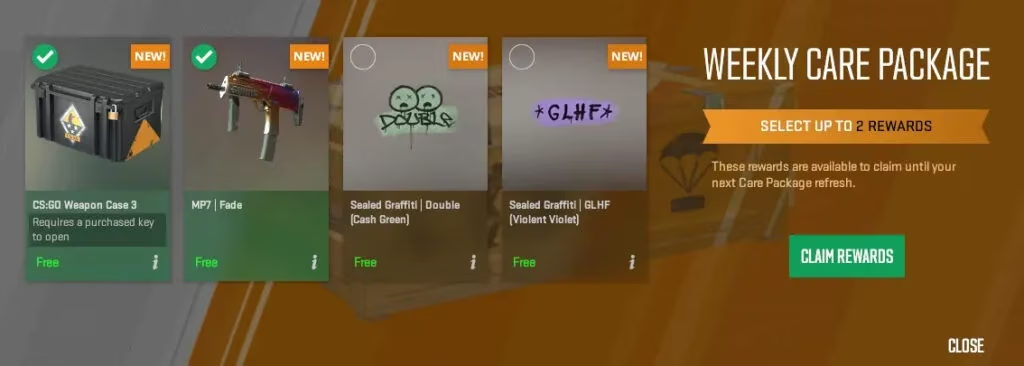
The safest and most honest way to get a case in CS2 is still the weekly care package. You play matchmaking, you win matches, and eventually you get to choose from four available rewards. You can only take two of the four, so if a case is staring back at you, you have to decide whether it is worth one of those slots. I have skipped cases before and regretted it for seven whole days. I have also grabbed a case and opened a blue skin worth less than my lunch. That is the deal.
A weekly drop is like finding a single ripe blackberry in a hedge after a long walk — small, random, and sweeter because you did not pay for it. The best way to trigger it is simply to keep playing matchmaking and winning. The system does not care about your dreams. It cares about your hours.
Buying cases on the Steam Market without getting scammed
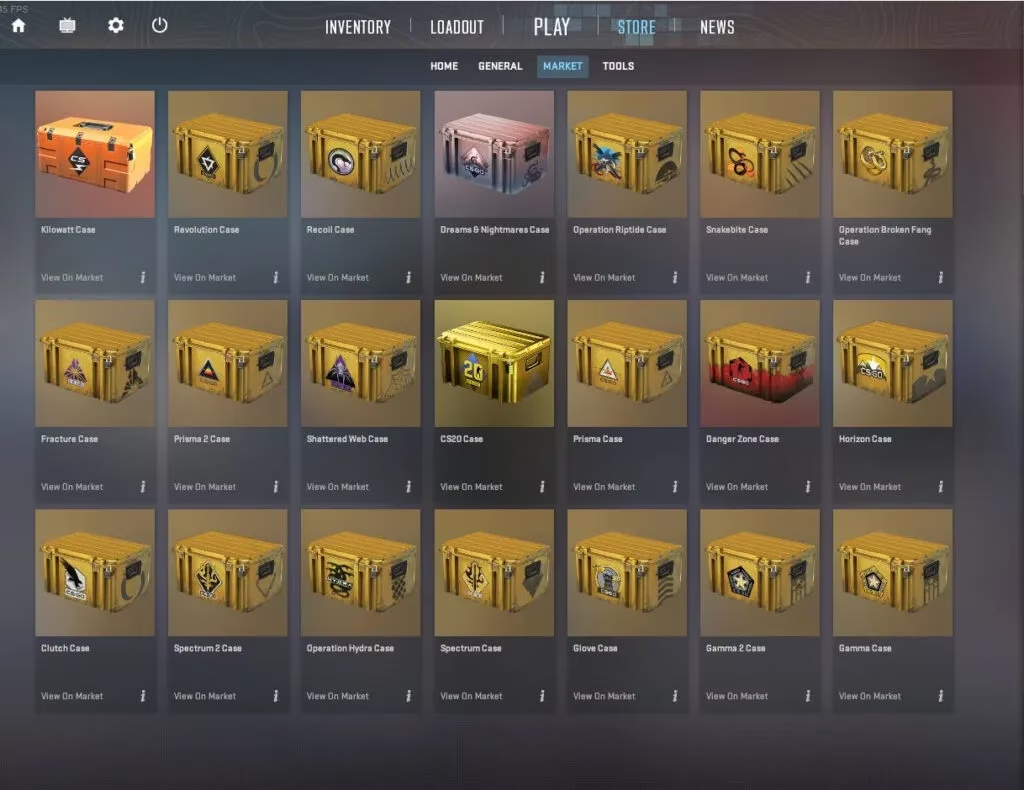
When the weekly drop is not enough, I head to the Steam Marketplace. Prices are set by the community, so a case with a rare skin or a specific knife tends to cost more. My routine is simple: open CS2, select Store, then Market, then choose a case. The only catch is that not every case appears on the front page. If you cannot find the one you want, click any case, then delete the selected filter next to the showing results text, and search for your case directly.
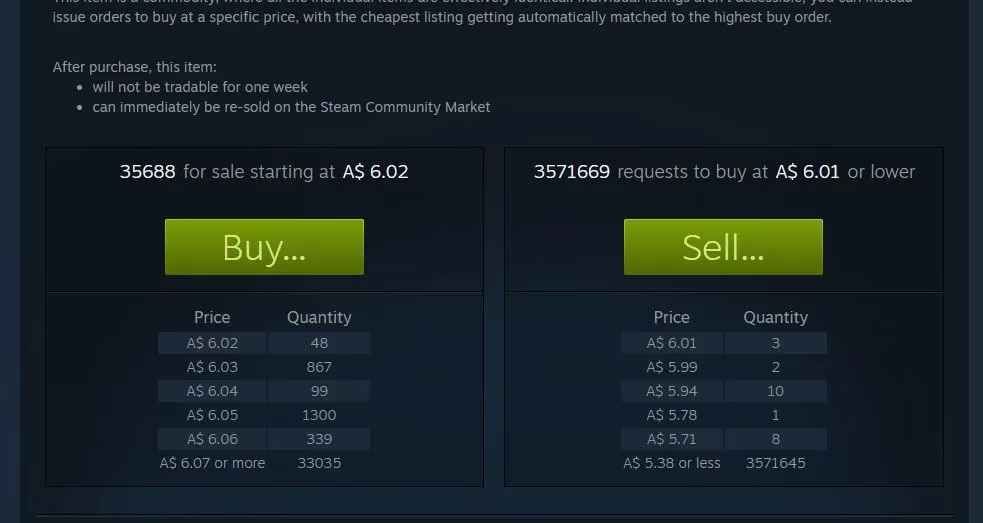
Once you find it, click it, scroll to buy, and purchase from someone who listed it. The Marketplace is a tide pool: beautiful things glitter under the surface, but you can still cut yourself on hidden glass if you stop paying attention. External skin websites are the deep water. Some are legitimate and used by large parts of the community. Others will take your funds or your skins and vanish. I avoid the risky ones unless the community trust is overwhelming, and even then I double-check everything.
How cases really work: colours, keys, and carnival odds
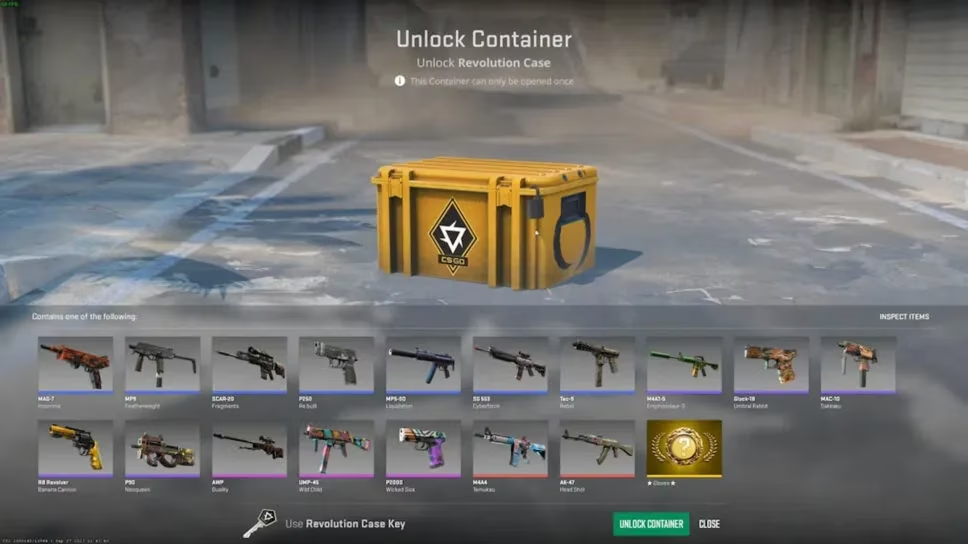
CS2 and CS:GO cases usually need a key to unlock, and then the game rolls its dice. Think of it as a slot machine designed by an accountant who hates joy. The chance of a top-tier weapon skin is tiny. The chance of a low-tier cosmetic is high. Most cases follow the same colour order from worst to best:
-
Blue
-
Purple
-
Pink
-
Red
-
Gold
A red or gold banner does not guarantee an expensive skin. The Steam Marketplace decides value, and that value depends on rarity, demand, and whether anyone actually uses the weapon. Not every case even contains a gold cosmetic, so I always check before spending money. The key itself can be bought on an external site, but the safest route is to try opening the case without one and follow the prompt. That keeps me inside Valve's system instead of trusting a stranger's checkout page.
Float: the fingerprint on every skin
A skin float is the wear rating on a weapon. It is like a fingerprint — almost every unboxed weapon gets a unique one. The tiers, from worst to best, are Well Worn, Battle Scarred, Field Tested, Minimal Wear, and Factory New. But wear does not always equal price. Sometimes a Well Worn skin beats its Factory New version because the pattern is rare or the market is strange. To see your float, inspect the weapon and hover over the small i in the white circle at the bottom of your screen.
| Tier | What it means to me |
|---|---|
| Well Worn | Often cheap, sometimes secretly valuable |
| Battle Scarred | Rough, beaten, occasionally beautiful |
| Field Tested | The everyday middle ground |
| Minimal Wear | Clean enough to show off |
| Factory New | The dream, until you see the price |
The full CS2 case list, newest to oldest
When I first started, I bookmarked a list of 41 cases. As of 2026, Valve may have added more, but these are the ones that taught me the game. Here they are from newest to oldest:
-
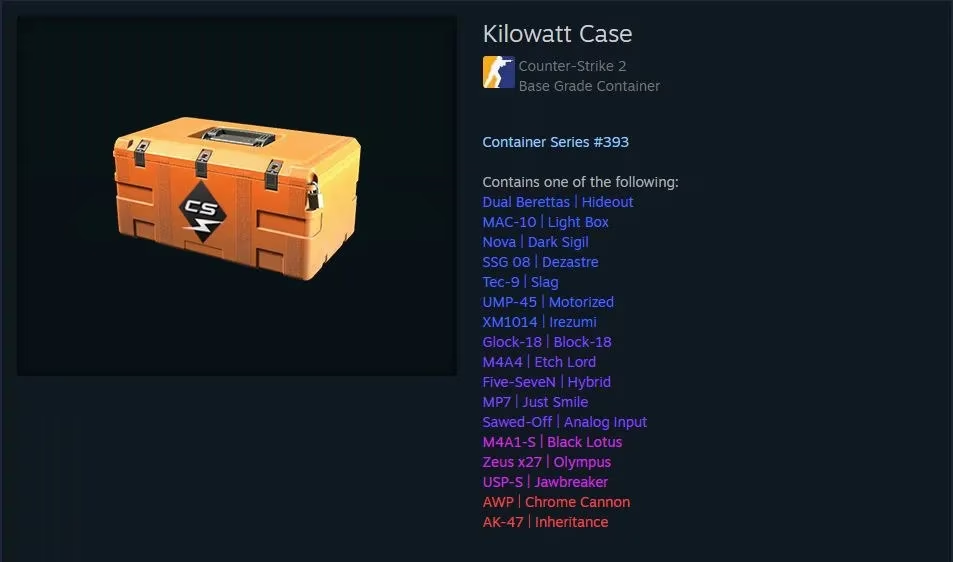
Kilowatt Case
-
Anubis Collection Package
-
Revolution Case
-
Recoil Case
-
Dreams and Nightmare Case
-
Operation Riptide Case
-
Snakebite Case
-
Operation Broken Fang Case
-
Fracture Case
-
Prisma 2 Case
-
CS20 Case
-
Shattered Web Case
-
Prisma Case
-
Danger Zone Case
-
Horizon Case
-
Clutch Case
-
Spectrum 2 Case
-
Operation Hydra Case
-
Spectrum Case
-
Glove Case
-
Gamma 2 Case
-
Gamma Case
-
Chroma 3 Case
-
Operation Wildfire Case
-
Revolver Case
-
Shadow Case
-
Falchion Case
-
Chroma 2 Case
-
Chroma Case
-
Operation Vanguard Weapon Case
-
eSports 2014 Summer Case
-
Operation Breakout Weapon Case
-
Huntsman Weapon Case
-
Operation Phoenix Weapon Case
-
CS:GO Weapon Case 3
-
Winter Offensive Weapon Case
-
eSports 2013 Winter Case
-
CS:GO Weapon Case 2
-
Operation Bravo Case
-
eSports 2013 Case
-
CS:GO Weapon Case
Final thoughts from a reformed case addict
Cases are not an investment strategy. They are a hobby with sharp edges. The weekly drop is the healthy part. The Marketplace is the convenient part. The opening screen is the dangerous part. If you are going to chase skins in 2026, do it with a budget, a clear head, and the understanding that the house always has the better odds. I still open cases. I still get blue. And somehow, I still come back next week.
Data referenced from SteamDB helps put CS2 case-chasing into a more grounded perspective: by tracking market pricing patterns and Steam-wide activity signals, it becomes easier to see when a “cheap” case is only temporarily low due to supply spikes, and when older cases drift upward because fewer are entering circulation. When you pair that kind of market context with the blog’s advice—lean on weekly drops, treat openings like entertainment, and budget hard—you can make smarter choices about whether to sell a fresh drop, buy a specific case on the Market, or simply stop before the odds (and the key cost) turn the ritual into a money sink.
Comments