NIP vs Complexity: A First-Person Look at a BLAST Elimination Thriller
I still remember the tension in the air when NIP and Complexity walked into the first elimination match of the BLAST Premier Spring Groups. As a professional player, I have watched hundreds of lower-bracket clashes, but this one had a special edge. Both teams had already lost their opening matches in Group C — NIP fell to G2, and Complexity fell to NAVI — so the loser would become the first team to exit the event. I pulled up the broadcast, leaned forward, and prepared for a match that felt less like a group-stage game and more like a knife fight in a phone booth.
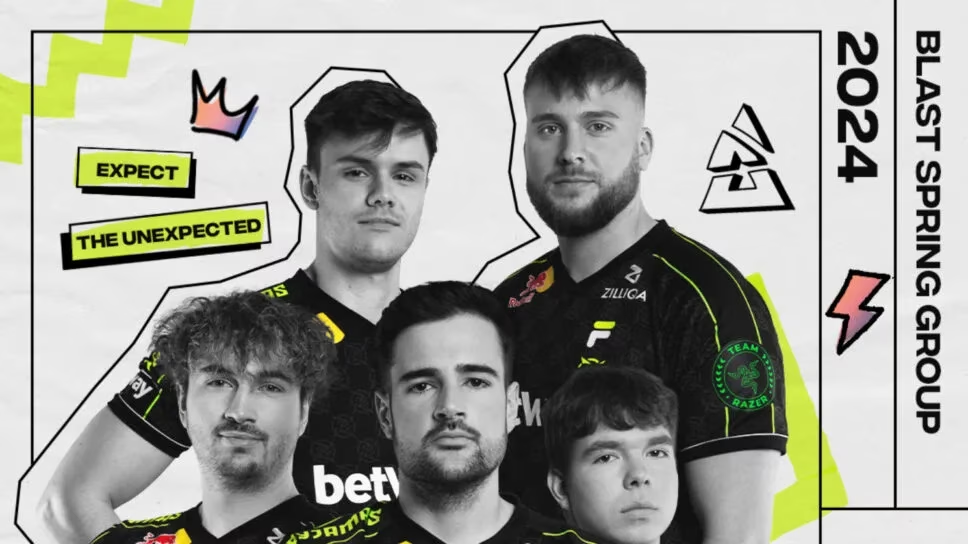
The stakes were brutally simple. There was no safety net, no second life, no “we will fix it next week.” One roster would pack its bags, and the other would live to fight another day. That kind of pressure changes how players peek, how they trade, and how they communicate. I could almost hear the comms tightening up before the first pistol round even started.
Here is how the two rosters lined up:
| Team | Players |
|---|---|
| NIP | Fredrik “REZ” Sterner, Patrick “es3tag” Hansen, Danyyl “headtr1ck” Valitov, Kristian “k0nfig” Wieneck, Alejandro “ALEX” Masanet |
| Complexity | Ioannis “Johnny” “JT” Theodosiou, Ricky “floppy” Kemery, Michael “Grim” Wince, Håkon “hallzerk” Fjærli, Jonathan “EliGE” Jablonowski |
NIP’s most interesting variable was ALEX. He had joined the roster and taken on the in-game leader role, bringing the kind of perspective he developed during his time with Movistar Riders. That kind of background matters. An IGL who has played in different systems can read a match in layers, and I was curious to see whether NIP could convert that experience into stable mid-round calls. The team had practiced together, but practice and elimination pressure are two very different animals.
Their opening match against G2 told the story. NIP looked relatively decent on the first map, but they could not find their footing on the second. That lack of consistency is exactly what made their BLAST fate so hard to predict. The Ninjas had potential, no doubt, but their performance swung heavily based on the opponent and the map veto. When a team depends that much on the veto, every ban phase feels like a coin flip with a live grenade attached.
Complexity, on the other hand, came in with a different kind of energy. The roster had spent time together as a squad, and they had recently finished first in the PGL Copenhagen qualifiers. That gave them momentum, even if the test against a non-NA team would be a real measuring stick. I liked their structure, their patience, and the way they could slow a round down when chaos started spreading. Still, I gave NIP a slight advantage in pure firepower and experience. On paper, that edge felt real. On the server, it would need to survive the first ten rounds.
The map veto was where my eyes really narrowed. Overpass stood out as the biggest differentiator. Both teams were strong on it, with win rates above 70%, and that made it a key deciding factor. If Overpass stayed in the pool, the match could turn into a chess game of utility, map control, and late-round rotations. I have always believed that Overpass rewards the team that communicates best in the mud — the squad that can chain together small advantages without panicking. 🎯
As I watched the veto unfold, I started thinking like a coach. What would I prioritize?
-
🔥 First contact confidence: NIP needed early duels from REZ and k0nfig to open space.
-
🧠 Mid-round discipline: Complexity needed JT and floppy to keep the structure intact when ALEX adjusted.
-
🗺️ Overpass control: The team that owned the map’s neutral zones would likely own the series.
-
😤 Nerve management: In an elimination match, one tilted round can become three lost rounds.
The match might go the distance — that was my read. NIP had the higher ceiling, but Complexity had the more settled shape. That contrast made every timeout feel important. I remember thinking that the first team to exit BLAST Premier Spring Groups would not necessarily be the weaker team; it would be the team that blinked first under the lower-bracket lights.
Looking back from 2026, that NIP vs Complexity elimination match still feels like a useful lesson in Counter-Strike storytelling. Rosters change, metas shift, and new stars arrive, but the lower bracket never changes. It strips away comfort. It asks who can stabilize, who can adapt, and who can turn a single map advantage into a closed series. I came away from that broadcast with the same feeling I get before every high-stakes match: in Counter-Strike, firepower gets you into the conversation, but stability decides who gets to stay. 🏆
Comments