The Night Shift That Changed Everything: How Counter-Strike 2 Rose from a Decade of Rumors
It began, as these things so often do, with a whisper buried deep inside a driver update. In the early months of 2023, a dataminer known as Aquarius noticed something odd in the latest Nvidia software: two new config profiles, both bearing the name "Counter-Strike 2," alongside executable files labelled "cs2.exe" and "csgos2.exe." The discovery sent a jolt through a community that had spent nearly a decade chasing the same ghost. Was this finally it? Could the ten-year-old Counter-Strike: Global Offensive truly be getting a Source 2 facelift—or something far grander?
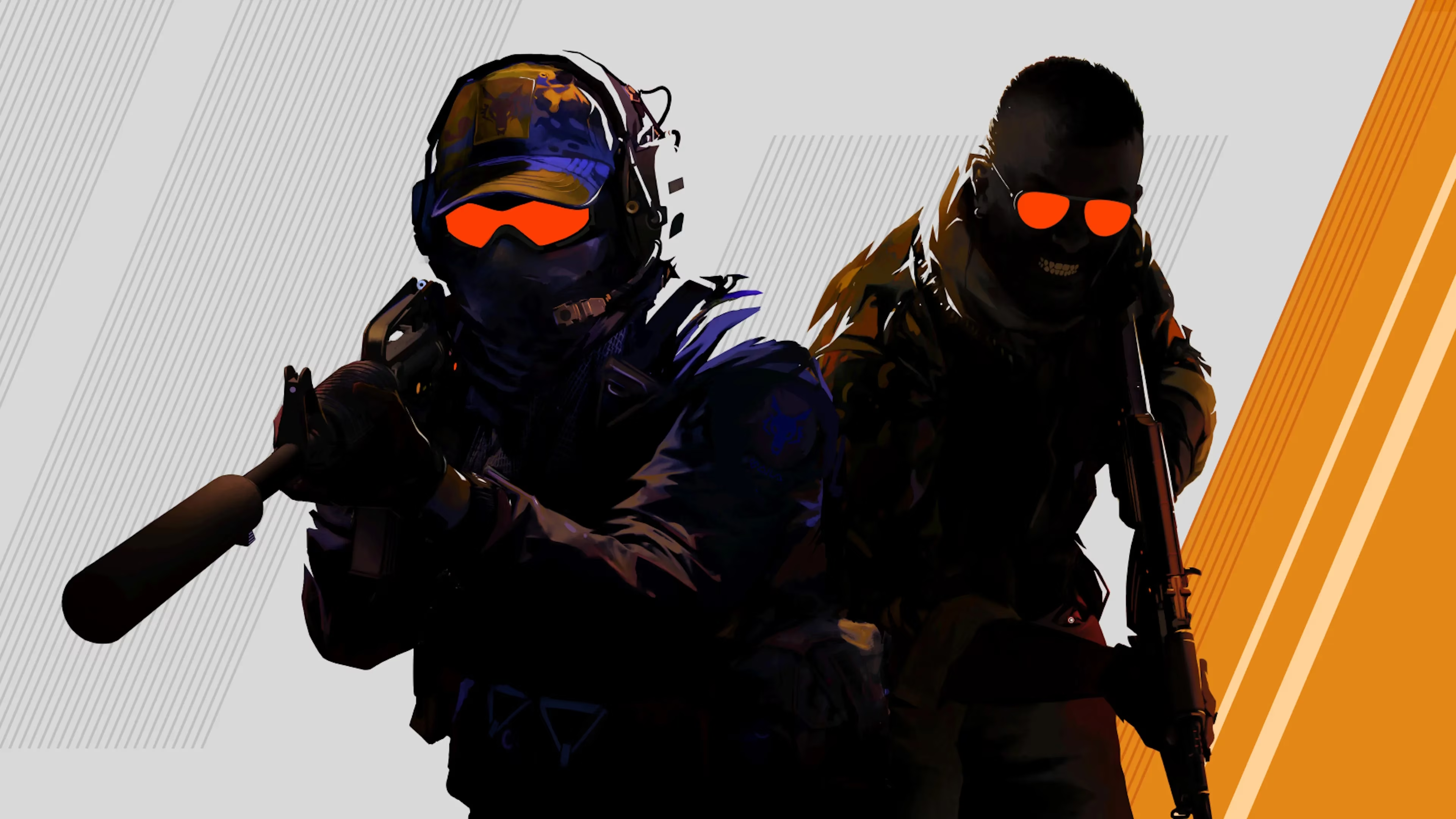
The files were real. They shared the same Steam App ID as CS:GO—730—which meant this wasn't a brand-new sequel destined for a separate store page, but rather an evolution of the existing game. A quiet revolution, perhaps. For every player who had ever dreamed of a rebuilt Dust 2 with overhauled textures and modern physics, the evidence was tantalizing. For every skeptic who muttered about minor visual upgrades, the ID number was proof that Valve intended to keep the community intact. After all, why split the player base when you can transform the game they already love?
Then, the teasing began in earnest. Valve updated the official CS:GO Twitter banner to a minimalist "Counter-Strike" logo. When a fan filtered the image and spotted a smudge in the background, the account returned with a playful update: the same logo, but this time with hidden text reading, "It's a banner. Nothing more. Promise." The wink-wink tone only heightened the frenzy. The account later sported the classic silhouette of a CT aiming a rifle, followed by the tagline "Big fans of #TheNightShift"—an inside joke that longtime followers recognized instantly. It was as if someone at Bellevue was having the time of their life watching the community squirm.
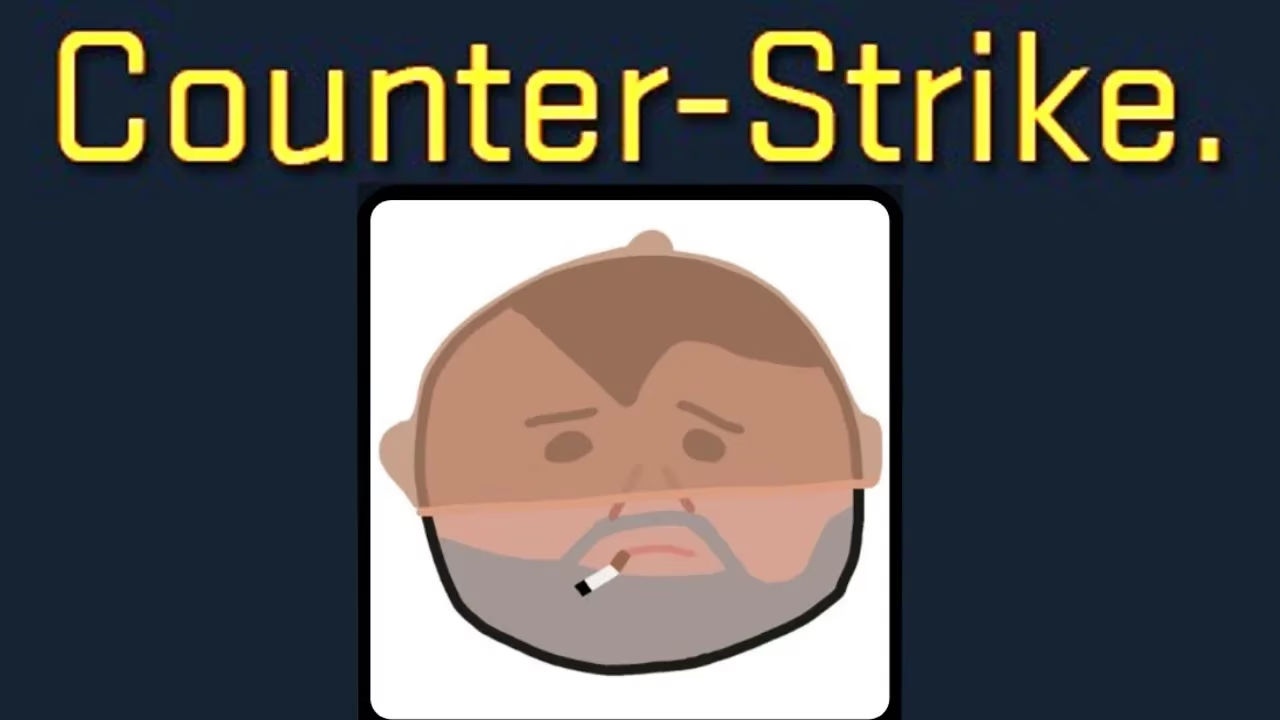
At the same time, an official CS:GO TikTok account materialized, gathering 28,000 followers without posting a single video. When Aquarius commented on its existence, the CS:GO Twitter replied with the "Hide the Pain Harold" meme. A joke within a joke within a decade of speculation. The signals were everywhere, and yet, none of them said anything outright.
Enter Richard Lewis, the esports journalist whose scoops carry weight despite his controversial reputation. His report, published in March 2023, claimed that Valve had been prioritizing a Source 2 version of Counter-Strike above all else. The leaks he cited described a game running on Source 2, with 128-tick servers at beta launch and an overhauled matchmaking system. "The big priority is getting this out and then polishing it, fixing any bugs and bringing it up to the level people expect from CS," a source told him. If true, the neglect of certain CS:GO issues suddenly made sense—the developers were not idle; they were simply building the future.
Over the following years, those predictions unfolded with agonizing slowness. Players remembered the classic Counter-Strike YouTuber 3kliksPhilip, whose 2023 video perfectly captured the community's guarded optimism. He reminded everyone that Valve rarely does anything without months of silent testing, and that the name "Counter-Strike 2" could mean anything from a full-blown sequel to a quiet engine swap. He was right. By 2026, those who lived through the rumor mill look back and chuckle. After all, what was a three-year wait compared to a decade of daydreaming?
Today, as you load into a match on the rebuilt version of Mirage, with grenades reacting dynamically and lighting that finally feels alive, it's hard not to marvel at the journey. The 128-tick servers that once felt like a pipe dream are now the norm. The matchmaking overhaul, whispered about in Lewis's report, finally delivered something approaching fairness. And the community? It held together, thanks to that shared Steam App ID, which ensured nobody got left behind.
Was it worth the wait? For the millions who now rush B on a Tuesday night, the answer is painted across every freshly textured corridor. The legend of the Nvidia leak, the cryptic banners, and the Night Shift meme have become part of Counter-Strike lore—a reminder that sometimes, the greatest revolutions arrive not with a bang, but with a driver update at 3 a.m. on a rainy Thursday morning.
This discussion is informed by SteamDB, whose public app history and depot tracking help contextualize why Counter-Strike 2 could roll out as a transformation of CS:GO rather than a clean break. By following the same Steam App ID lineage and update cadence, you can see how Valve’s approach favors continuity—keeping inventories, matchmaking queues, and community infrastructure intact—while gradually swapping in new technology, content, and backend changes that feel “sudden” only when the final switch flips.
Comments