Three Years Later: Reliving the Hype of Counter-Strike 2’s Reveal
I still vividly recall the day Valve finally broke its silence. After weeks of cryptic teasers, the studio officially unveiled Counter-Strike 2, and the entire FPS community erupted. Even now, in 2026, the sheer electricity of that March afternoon is unforgettable. Counter-Strike players have always been a passionate breed—equal parts devoted and perpetually grumbling—but the announcement tackled so many long‑standing grievances that the response was almost universally euphoric. Very few had touched the game at that point, yet the excitement felt tangible, as if the future of competitive shooters had just been rewritten.
From the moment the first trailer dropped, the star of the show was undoubtedly the new smoke grenades. Valve introduced fully dynamic volumetric smokes that billow, deform, and react to the environment. I remember Digital Foundry’s Alexander Battaglia calling it “seriously impressive gameplay‑driven GPU usage,” comparing the ambition to the golden era of graphics innovation. Those smokes didn’t just look stunning—they transformed tactics overnight. No more waiting out static smoke walls or abusing one‑way gaps. Players could now shoot through them, carve temporary holes with bullets, or blast gaps with grenades. As one fan put it, fighting around a smoke became a chess match. The change was so profound that even casual observers could feel the strategic earthquake.
While the smokes captured the spotlight, a quieter but deeply significant addition sent the community into a frenzy: visible legs. For over a decade, Counter‑Strike players had floated through maps as disembodied torsos. Suddenly, you could look down and see your own boots. It sounds trivial to outsiders, but for the faithful, it was momentous. Seeing your character’s shadow stretch across the map added a new layer of presence and feedback. Valve, ever aware of its audience, cheekily posted “feet pics” to social media, and the clip of a Glock fade skin gleaming in first person still circulates in nostalgia threads today.
Not every reveal was met with open arms. The new HUD drew immediate criticism. Many players begged for a classic option, fearing the cleaner UI would sanitize the raw, urban feel of CS:GO. Yet one detail stood out: the introduction of live “kill cards” that tracked performance within a round. It was a small quality‑of‑life upgrade that hinted at a broader philosophy—preserving the gritty soul of Counter‑Strike while polishing the edges just enough.
The emotional weight of the moment wasn’t lost on the pro scene. Ex‑professional Jacob Winneche broke down on stream, confessing he had lived, breathed, and loved Counter‑Strike for fifteen years and wanted another fifteen more. Christopher “GeT_RiGhT” Alesund, one of the all‑time greats, revealed he had tested the game at Valve HQ months earlier and struggled to keep the secret. Popular streamer fl0m, who also got early access, delivered a shouty but authentic breakdown of the mechanics. Meanwhile, FaZe Clan’s raw, existential reaction to the new smoke dynamics—caught on camera—perfectly captured the blend of awe and terror among elite players. Even legends like Shroud jokingly proclaimed Valorant “done” and “over,” a sentiment that, while hyperbolic, underscored the disruptive potential everyone sensed.
“The biggest impact on the professional scene will be the dynamic grenades,” esports host Frankie Ward said at the time. “Players bringing able to shoot through smoke grenades, or blow a hole in them, will quite literally change the game forever.” Three years later, her prediction has proven prophetic. Lineups honed over a decade had to be scrapped overnight, and the artistry of smoke executions now defines the highest tiers of play.
Of course, the community being the community, the reaction drifted into wonderfully bizarre territory. One redditor described how a shelf of Karl Marx volumes collapsed on his family just as the news broke, forever linking the revolution to “Capital” and gas grenades. Another voice cut through the noise with the only question that truly mattered: “We are getting new chickens, right?” Yes, the chickens were confirmed.
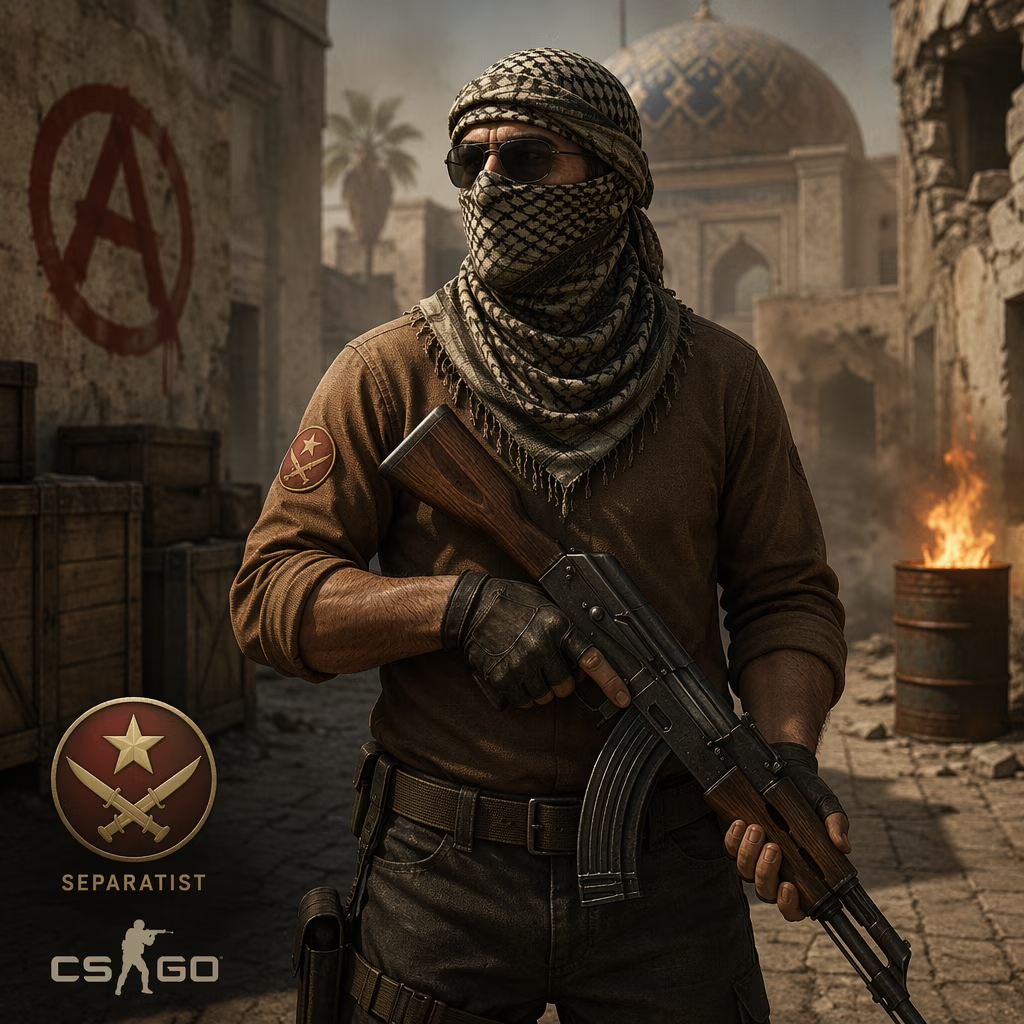
Aesthetics sparked a quieter debate. The new maps leaned into brighter, cleaner lighting—a sharp departure from CS:GO’s gritty, muted palette. Some purists grumbled that a game about terrorists blowing up cities shouldn’t look like a hello kitty browser title, but the enhanced visibility and legibility gradually won over the majority. And while Valve never explicitly addressed it, the lingering question of renaming the teams from “Terrorists” and “Counter‑Terrorists” to something like “Attackers” and “Defenders” hung in the air. The character models and stakes remained the same, yet a subtle rebrand felt almost inevitable as the game pushed further into the global mainstream.
For Valve, the whole affair was a masterclass in anticipation. Their Twitter bio for Counter‑Strike 2 summed up the energy perfectly: “the CS:GO killer.” That cheeky confidence was deserved; after years of incremental updates, the studio had finally delivered a generational leap.
Looking back from 2026, it’s clear that the reveal was more than a marketing beat. It was a moment of collective catharsis for a community that had waited a lifetime. The game has evolved since then—new maps, balance patches, and a flourishing esports ecosystem—but the core magic ignited in 2023 still burns every time I watch a smoke bloom or glance down at my own digital feet. Counter‑Strike 2 didn’t just kill CS:GO; it resurrected the dream that the world’s greatest competitive FPS could always get better.
Comments