Valve's Hilarious Defense: Why CS2 Loot Boxes Are Just Like Baseball Cards
So here I am, in 2026, still watching Valve argue that buying a virtual key to open a digital mystery box isn't gambling—it's just like cracking open a pack of baseball cards. And honestly? I kind of love the audacity.
New York Attorney General Letitia James filed a lawsuit earlier this year claiming that Counter-Strike 2's loot boxes are basically unregulated casinos for kids and adults. The state wants Valve to pay three times the profit it made from those shiny virtual crates and stop selling them in New York. You can almost hear the collective gasp from skin traders everywhere.
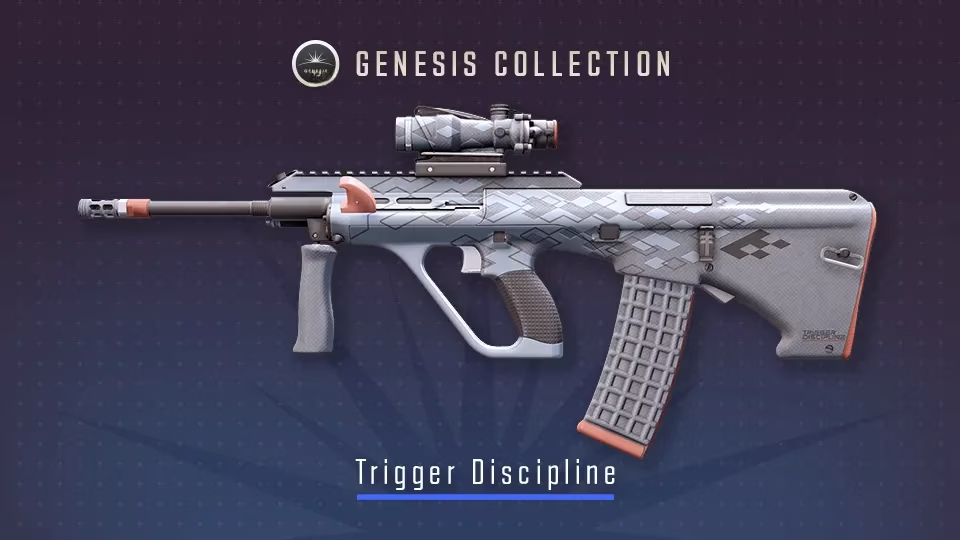
Valve recently filed a motion to dismiss the whole thing, and their legal team went full Saul Goodman with the comparisons. Their core argument? Every player always receives exactly what they paid for—one skin per mystery box. No risk, no wager, no gambling. You get a skin, I get a skin, we all get skins. The fact that some of those skins can be resold for real cash on third-party sites is apparently just a happy coincidence, like finding out your Beanie Baby is worth a mortgage payment.
The legal brief leans hard into the "it's just like baseball cards" nostalgia trip. I have to admit, reading about Aaron Judge's rookie card selling for $5.2 million privately did make me chuckle. Valve’s lawyers are basically shouting: "If opening a pack of cards with a random chance of a million-dollar piece of cardboard isn't gambling, then neither is my virtual AK-47 with a blue laminate!".
They didn't stop there. The filing rattles off a delightful list of childhood touchstones: Labubus, comic book grab bags, cereal box toys, Happy Meal prizes. Even Chuck E. Cheese gets a shout-out for its ticket-to-prize exchange. "Can a child reach into a cereal box and grab a surprise toy?" the lawyers write. "All these actions and more could lead to chargeable crimes under NYAG’s interpretation of gambling." Nonsensical, they say, and I'm here for the sheer theater of it all.
Now, let’s be real. I've opened enough CS2 cases to know the drill: you get that little dopamine hit when the wheel spins, and 99% of the time you end up with a skin worth three cents that looks like it was painted by a blindfolded toddler. The key costs $2.49 a pop. If I wanted to light money on fire, I'd at least get a marshmallow and a campfire song. But Valve insists there's no "value" involved because skins aren't money, property, or tokens exchangeable for money. Legally speaking, they might have a point, even if my Steam wallet disagrees.

What makes this whole saga extra spicy is that Valve hasn't been standing still. Over the last few years, they've tweaked how rewards work in CS2. Players can now opt for weekly rewards and completely skip the gambling-adjacent mystery boxes. Germany even forced Valve to add a feature that lets you peek inside a case before opening it—because apparently German regulators don't enjoy surprises as much as the rest of us.
Yet here we are, with New York arguing that the entire skin ecosystem is an unregulated gambling ring that needs to be nuked from orbit. The state's lawsuit points to those eye-watering gun sales on third-party sites and says, "See? Real value. Kids are betting." Valve counters by patting a stack of vintage Topps cards and whispering, "It's just a hobby, bro."
I can't help but think about the long-term implications. If Valve loses, the entire industry model of random rewards could face an existential reckoning. If they win, we'll all be explaining to our grandchildren that Grandpa's souvenir Dragon Lore was technically just a collector's item, not a gambling debt.
One thing’s for sure: watching a video game company compare its microtransaction-powered economy to the innocence of childhood cereal box toys is the kind of 2026 absurdity I live for. Now if you'll excuse me, I need to go check my Steam inventory. That dusty old AWP might just be my retirement plan.

Comments